
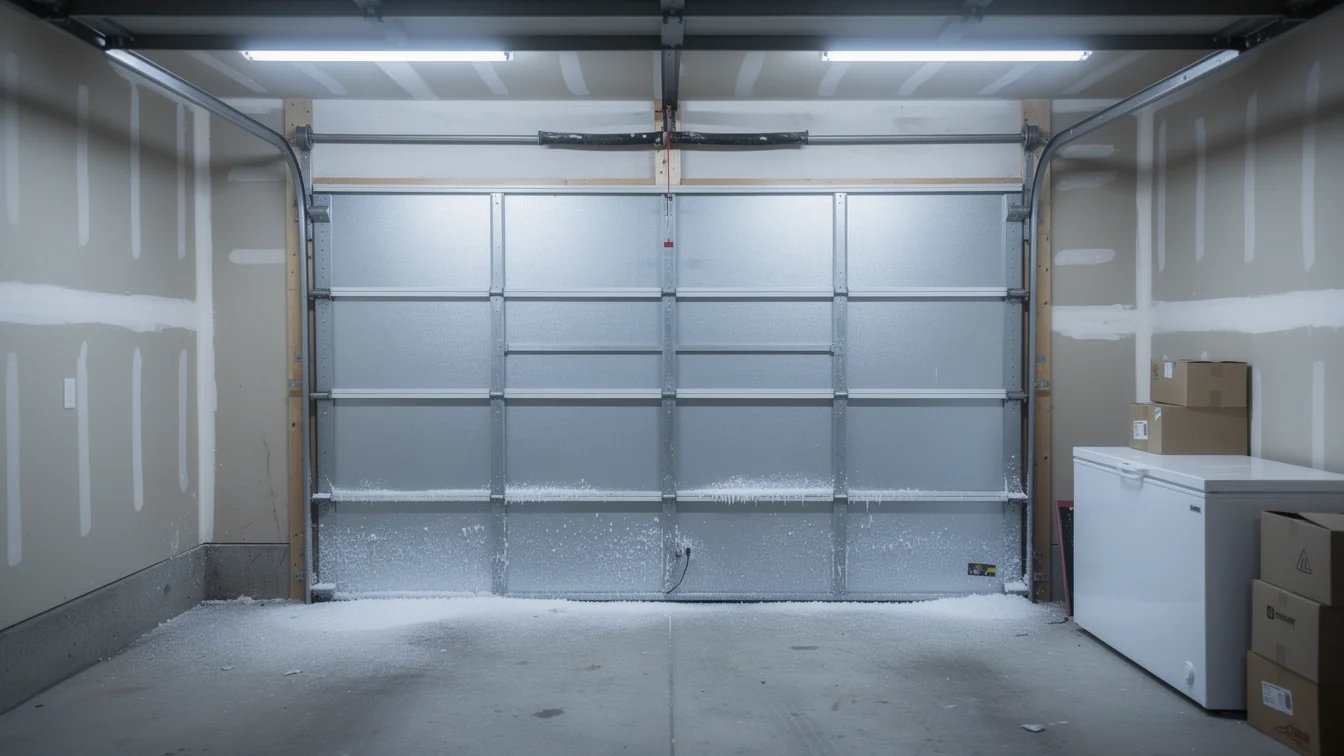
What Happens When You Put Off a Garage Door Repair in Mankato
Mankato's housing stock mostly dates to the 1960s-70s with a 1975 median build year, and the cold climate band here turns small door problems into bigger ones fast.
Read moreMankato's housing stock runs 1950-1996, median 1975. Here's how that age and our cold climate decide whether your door is worth repairing or replacing.
Local detail
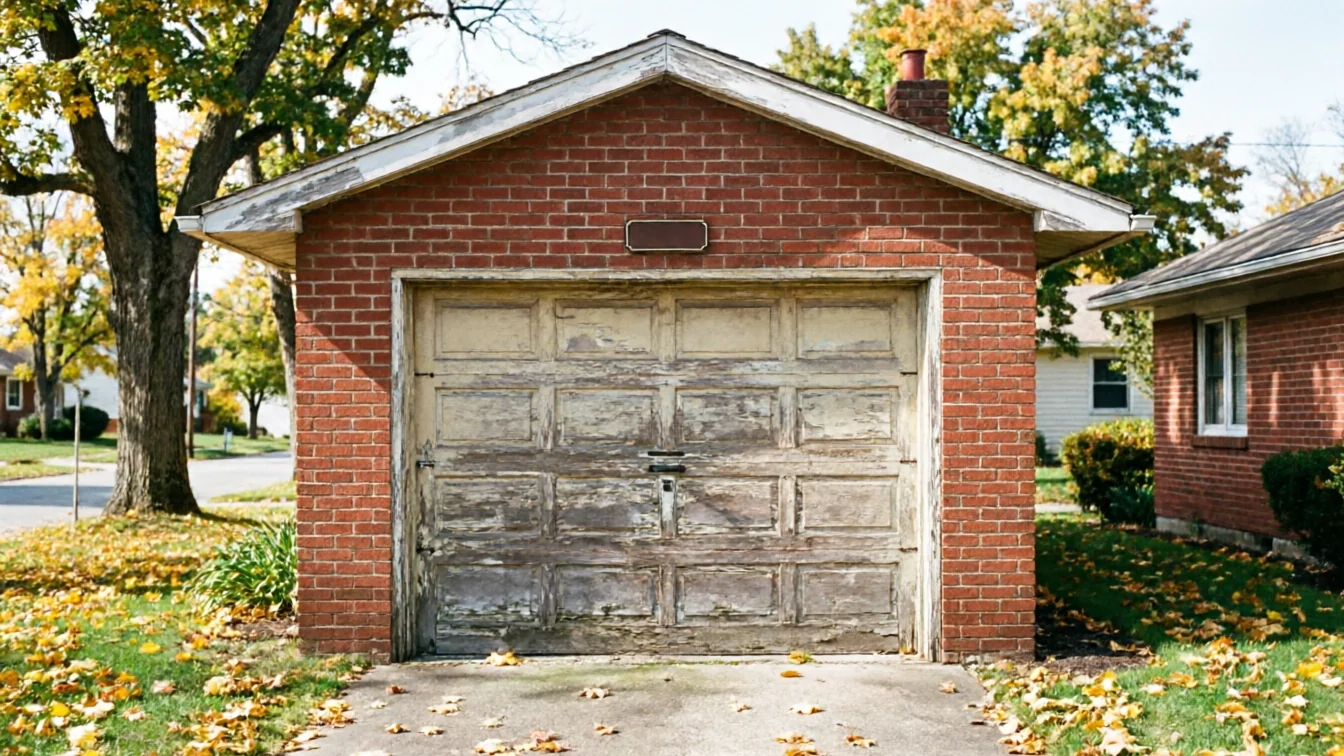
A lot of Mankato homeowners leave a stiff or noisy door alone because it still closes. That's a reasonable call on a door from the last ten years. It's a riskier call on the doors common across this service area, where most houses were built between 1950 and 1996 with a median build year around 1975. A door installed with that house, or a replacement from the 1980s or 90s, is running on hardware nobody stocks the exact match for anymore - track brackets, hinge gauges, roller sizes that have changed twice since. Doing nothing costs you nothing today. It costs you a scramble in January when the spring finally lets go and the part needs to be sourced instead of grabbed off a shelf. If the door still runs true and the panels aren't rusted through, waiting a season is fine. If it's already dragging on one side, that's not a door that's going to fix itself by spring.
The area
The mistake we see most in this area is people replacing an opener or a spring on a door that was never built for our winters in the first place. Mankato sits in a severe cold climate band, and a lot of the original doors from the 1960s and 70s stock weren't insulated for that - they were built when a garage was just a place to park, not a thermal boundary on the house. Swapping the opener motor on one of those doors fixes the symptom, not the problem. The panel itself is still letting cold straight through to whatever's on the other side of that wall. The other mistake is treating every repair as routine. A torsion spring job on a door built to a 1975-era width and track spec isn't the same job as on a door from 2015. If a shop doesn't ask the age of your house before quoting the fix, that's worth noticing.
What we find
Cold is hard on steel and hard on lubrication, and a severe cold climate band means the swings here aren't mild. Rollers that run fine at 50 degrees bind up at ten below. Torsion springs lose tension cycling through hard freezes and spring thaws year after year, and that wear shows up faster on a door that's already fifty years into its life than on one that's ten. Across this area - North Mankato, Eagle Lake, Belgrade, St. Clair, Kasota, and the rest of the towns within fifteen or twenty miles - the housing stock skews the same way, so the same decision point comes up again and again: is the door itself still sound, or has forty-plus winters taken the temper out of the steel and the squareness out of the frame. A door that's racking in its track, even slightly, is one cold snap from a cable off the drum.
How we work
Across the roughly 9,651 owner-occupied houses in this service area, the pattern is consistent: most garage doors are original to a house built decades ago, not a recent upgrade. With median household income here at $81,265, replacement is affordable when it's warranted, but plenty of these doors are worth one more repair before that conversation. The honest limitation is this - we can't tell you whether your specific door is worth fixing without looking at the track alignment, the panel condition, and the spring type, because a 1975 door and a 1990 door in this same climate band age differently depending on how they were built and maintained. What we can tell you is that age alone isn't the deciding factor. A sound panel on good track, even from the 70s, is often cheaper to keep running than to replace. A warped panel or a rusted-through bottom section usually isn't.
Questions
Check the panels and the track first. If the panels are flat and not rusted through, and the door doesn't bind or rack when it moves, repair usually makes sense even on an older door. If the track is bent, the panels are warped, or it's racking visibly, you're often throwing money at a door that's structurally done.
Mankato sits in a severe cold climate band, and steel hardware - springs, rollers, hinges - loses tolerance faster in hard freeze-thaw cycles. A door built decades ago often lacks the insulation and weatherstripping standard on newer doors, so cold-weather problems show up sooner and more often on that original hardware.
Sometimes. If the panel frame and track are sound, adding insulation can help in our cold climate without the cost of a full replacement. If the door is already racking or the panels are damaged, insulating a door that needs replacing anyway isn't a good use of the money.
Recommendation
More garage door guides for Mankato homeowners.
Mankato's housing stock mostly dates to the 1960s-70s with a 1975 median build year, and the cold climate band here turns small door problems into bigger ones fast.
Read more
Mankato homeowners: if your garage door squeals, bangs, or grinds, here's what's really happening - and why the cold winters and 1960s-70s stock matter.
Read more
A straight look at what our service call actually checks on Mankato homes, most built between 1950 and 1996, through a cold-climate winter cycle.
Read moreReady when you are
Mankato Garage Door Pros repairs and installs garage doors, springs and openers in Mankato, MN and the surrounding area.