
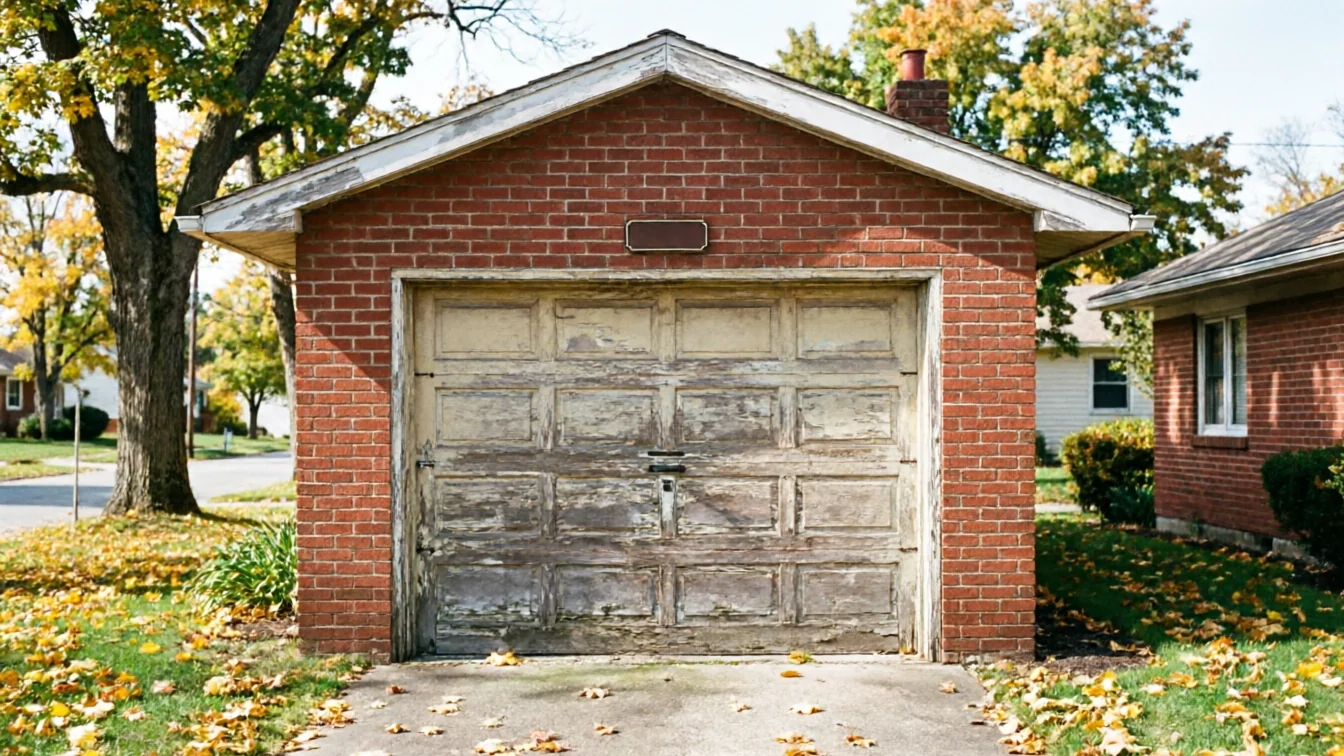
Is Your Old Mankato Garage Door Worth Fixing
Mankato's housing stock runs 1950-1996, median 1975.
Read moreMankato's housing stock mostly dates to the 1960s-70s with a 1975 median build year, and the cold climate band here turns small door problems into bigger ones fast. Here's what that means for you.
Local detail
A lot of homeowners here let a noisy roller or a slow-closing door ride for a season, and in most parts of the country that's a reasonable bet. It's a riskier bet in Mankato. The housing stock across this service area mostly went up between 1950 and 1996, with a median build year around 1975, which means a big share of doors and openers are original or close to it. A door that's already decades into its service life doesn't have much slack left before a worn part turns into a failed one.
The math gets worse because of where we sit climate-wise. This is a severe cold band, and cold doesn't just make things sluggish - it makes brittle metal fail outright, usually on the coldest morning of the year, which is also the morning you most need the door to open. Waiting on a spring that's already showing its age, or an opener that's starting to strain, isn't neutral here. It's a bet against a specific kind of winter.
I'm not saying every squeak needs a same-day call. A door that still opens smoothly and closes flush can usually wait for a scheduled visit. But if something's changed in how it sounds or moves, that's information, not noise to tune out.
The area
The most common mistake I see in houses from the 1960s and 70s stock that makes up so much of this area is treating the opener as the problem when the door is the problem. An opener straining to lift a door is often doing exactly what it's built to do - compensating for springs that have lost tension or hardware that's binding. Replace the opener on a 50-year-old door with tired springs and you've spent money without fixing anything.
The second mistake is assuming a part that worked fine for twenty winters will keep working fine indefinitely. Springs, cables, and rollers all have a fatigue life measured in cycles, not years, and cold makes metal fatigue show up sooner, not later. A spring rated for so many open-close cycles doesn't know or care that it's been quiet for a decade - the cycle count is still ticking.
Third: people in homes built before current insulation standards sometimes assume a drafty garage is just how an old door behaves. Sometimes it is. Sometimes it's a seal that's cracked and worth ten minutes to check before you resign yourself to a cold garage every January.
What we find
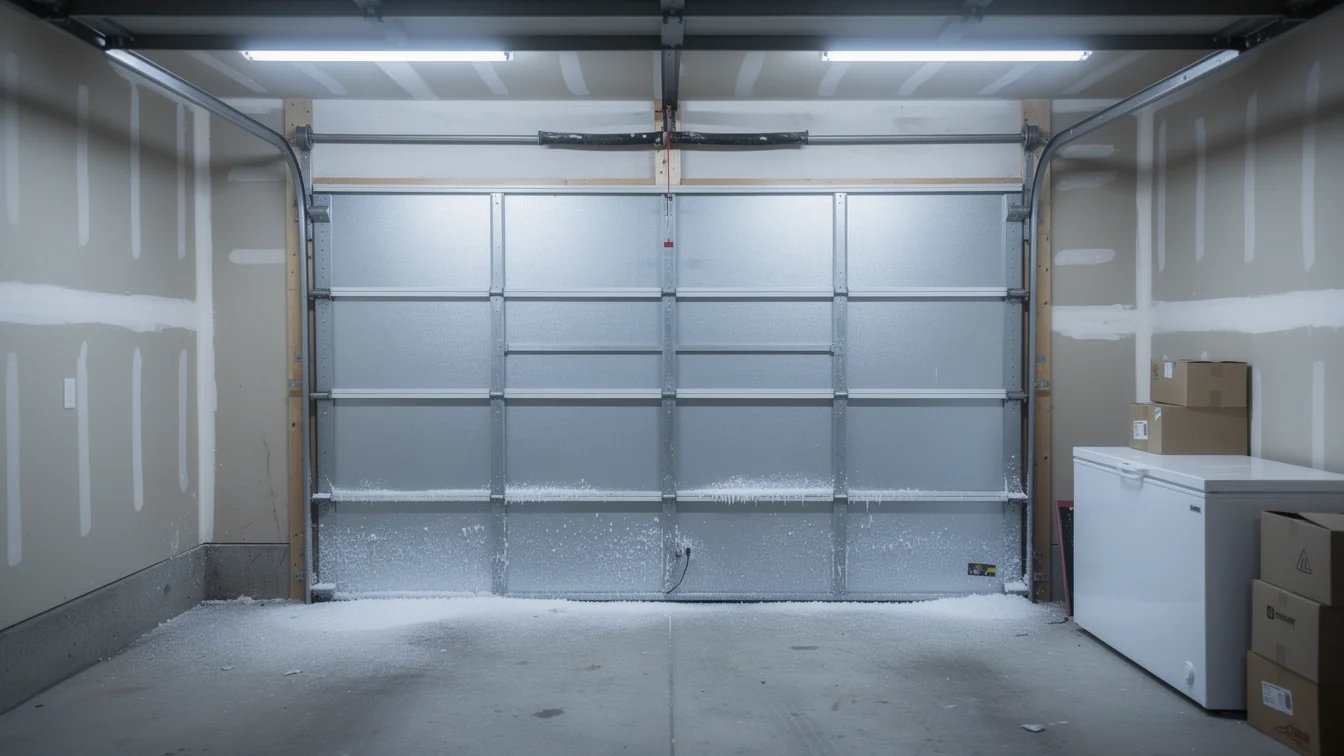
Severe cold does specific, predictable things to garage door hardware, and this area sits squarely in that band. Steel springs lose flexibility as temperatures drop, so a spring that's borderline in October can snap in January under the exact same load it handled fine all fall. Nylon rollers get brittle and start cracking. Lubricant thickens, which makes the opener work harder to move a door that's suddenly heavier to lift than it was in summer.
For the roughly 9,651 owner-occupied houses in this service area, most sitting on hardware installed well before modern weatherstripping became standard, that combination matters more than it would somewhere with a milder winter. The door isn't just older - it's older in a climate that's actively working against aging metal.
I won't tell you cold causes every failure, because it doesn't. Plenty of calls here are just ordinary wear that would have happened in any climate. But when a spring goes in week one of a cold snap, that's not coincidence - that's a part that was already near its limit meeting a temperature drop it couldn't absorb.
How we work
Put the pieces together and the picture for Mankato is pretty clear. A median household income of $81,265 across 17,574 households means most people here can afford to fix things properly rather than patch them, but a lot of the housing stock - 1950 through 1996, median 1975 - is old enough that original hardware is past the point where patching makes sense anyway. Add a severe cold climate on top of that, and the failures that show up tend to be sudden rather than gradual: a spring that snaps overnight, not a roller that squeaks for months first.
If you're in North Mankato, Eagle Lake, or one of the other nearby communities, the same housing-age and climate math generally applies - the building booms that shaped this part of the state ran through the same decades. What's going on, mostly, is aging hardware meeting winter stress it wasn't built to handle forever. That's not a reason to panic. It's a reason to treat a changed sound or a sluggish close as worth a look before the coldest week of the year decides it for you.
Questions
Cold makes steel springs more brittle, so a spring that's near the end of its cycle life is far more likely to snap when temperatures drop than during a mild month. If your house is from the 1960s or 70s like much of this area, the spring may simply be old enough that winter was the final push, not the cause.
Usually not by itself. A door that feels heavy to the opener is often a spring tension problem, not a motor problem. Replacing the opener without checking the springs on an older door typically just moves the strain to a new motor instead of fixing it.
Not always. Houses built before current insulation standards often have doors without modern seals, but a seal that's cracked or missing is worth checking before you assume the draft is just the door's age. Sometimes it's a cheap fix, sometimes it's genuinely original hardware with no seal to speak of.
Recommendation
More garage door guides for Mankato homeowners.
Mankato's housing stock runs 1950-1996, median 1975.
Read more
Mankato homes built 1950-1996 see torsion springs fail hard when cold hits them.
Read more
Mankato homeowners: if your garage door squeals, bangs, or grinds, here's what's really happening - and why the cold winters and 1960s-70s stock matter.
Read moreReady when you are
Mankato Garage Door Pros repairs and installs garage doors, springs and openers in Mankato, MN and the surrounding area.